Before We Knew the Stats, We Knew the Kids
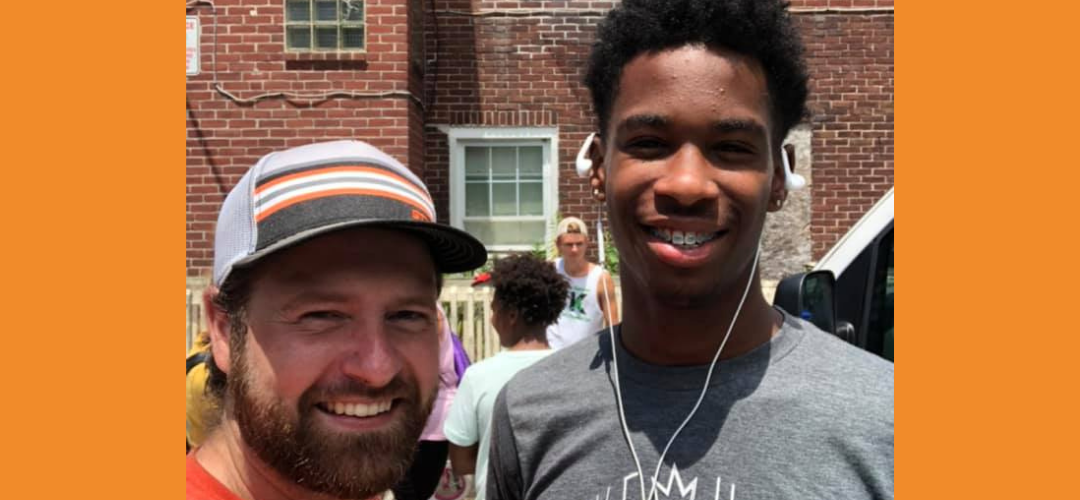
Every "why" in our work has a face behind it. For us, one of the first faces was Labron's.
We met him when he was ten years old, just a little guy, who lived in a rented house right behind the mansion. Back then, our yard was the neighborhood's unofficial hangout spot. Kids from the block would show up after school and just camp out, wasting time until their parents got home with all of us who lived in the mansion, riding bikes, throwing a football - just being kids in a place that felt safe.
Labron was one of those kids. He was easygoing and unassuming, never one to make a scene or ask for attention. He just showed up. He’d watch us as we were busy working around the house on different projects, and it didn’t take long before his curiosity led him to our place most every day after school. He had a gentle, sweet disposition and a work ethic that seemed beyond his age - the kind of kid who made you believe, without him ever saying a word about it, that something good was going to come of him.
His family’s house backed right up to the same alley that ran behind ours, and that strip was a notorious dumping ground. Worse than that, it was a place where people dealt drugs and turned tricks in both broad daylight and deep into the night. Labron and the other kids on that block didn't have the option of not seeing this play out before their young eyes. It was in their literal backyards. It was on their walk home. It was just there, as regular as any other neighborhood feature, something no kid should ever have to grow up considering normal.
Back in 2013, when we first moved in, we'd hear gunshots regularly - close enough that our instinctual response was to crouch down near the floor. There were no fewer than 4 homicides right on our block that first year. They were close enough that we knew the streets, if not always the names. Yet, in all of this, we never once heard that and thought, “This neighborhood needs help!” Instead, we thought about the kids: our actual neighbors. You know, the ones playing in our yard twenty minutes earlier. We thought about Labron, and what kind of future he was going to get handed if nothing around him changed. That's what created a sense of purpose that was personal instead of theoretical. It was never really about fixing a neighborhood. It was about these kids, and whether we were going to do something about the bleak future of the status quo or get used to it ourselves like everyone told us we eventually would.
That's the part that ignited something in us. Not statistics about crime rates or blight - we didn’t know those yet. It was actual kids, our friends and neighbors that we knew by name. It was kids who came into our yard to be kids for a few hours longer before going home to streets where addiction and trauma played out in plain sight to the response of shrugged shoulders. We couldn't unsee it all once we saw it through their eyes. It's a huge part of why we started “Love the Hill” in the first place, why we started clearing lots and hauling trash and reclaiming alleys one at a time. We weren't just trying to make the neighborhood look nicer. We were trying to give kids like Labron somewhere to walk home to that didn't force them to grow up faster than they should have.
Somewhere in the middle of all that ordinary after-school routine, something less ordinary started happening. Tannon started roping Labron into projects around the property, patching walls, building a set of bunk beds from scratch, figuring out which end of the drill was which. It wasn't a curriculum. Nobody called it mentorship at the time. It was mostly just two guys with a tape measure, a lot of trial and error, and Tannon giving Labron lots of room to learn, make mistakes, and understand how to fix them. Looking back, we're pretty sure Labron learned as much about patience (both his own and Tannon’s) as he did about power tools. But we learned something too: that showing up for a kid doesn't require a program or a plan. Sometimes it just requires a yard, a little bit of time, and the willingness to be present.
We didn't know it then, but we were watching the earliest version of what would eventually become our Teen Internship program - part of Wildheart that would one day employ dozens of kids from this neighborhood each summer that began, in a very real sense, with one.
Labron grew up in The Hill the way a lot of kids here do: surrounded by people who loved him and surrounded by housing that was falling apart around him. The house his family rented behind us was eventually condemned. Unsuitable to live in, plain and simple. They had to move, and like so many families in Allison Hill, they didn't have a lot of options. They landed somewhere else nearby, still in The Hill, still close enough to stay in our lives.
By the time Labron turned sixteen, the story had come full circle in the best way we could have hoped for. He joined our Teen Internship program, working alongside our summer staff, getting paid to help take care of the same streets he used to run around on as a little kid. The boy who once helped Tannon build a set of bunk beds was now out there building up his own neighborhood with the same easygoing spirit, same steady hands, just older, taller, and with a little bit of facial hair starting to poke through. Watching him in that Love the Hill t-shirt, working a block he'd once played on, is one of the proudest things we've witnessed in this ministry. If we'd written that ending ourselves, we wouldn't have believed it was possible.
Then real life did what real life sometimes does.
Not long after Labron worked with us, the eviction moratorium that had protected so many renters in our neighborhood through 2020 came to an end, and his family was evicted. They wanted to stay in Allison Hill. This was home. But there was nothing here for them. No vacancies, no affordable options, nothing. A family we had watched raise their kids on these streets, a family whose son had grown up in our yard and then gone on to work beside us, was pushed out of the only community they'd ever known. Not because they didn't belong here. Because there was nowhere left for them to belong.
We remember exactly how that felt - it felt like failure. We had spent years already hauling trash, planting gardens, and pouring ourselves into every corner of this neighborhood, and yet none of it had been enough to keep even one family we loved in the home they wanted to stay in. That kind of heartbreak has a way of rearranging your priorities.
Labron's story is one of the reasons Wildheart looks the way it does today. It's the reason we stopped believing that a beautiful block was the same thing as a restored community. You can plant every flower box in Allison Hill, but if the people who live there can't afford to stay, you haven't actually given them anything that lasts. You've just tidied up the place before someone else moves in. Labron's family didn't need us to just help fix up their block. They needed a home nobody could take from them. And that realization is what pushed us into affordable housing. It's why the Harrisburg Community Development Corporation exists now, why we're working to rehab and build homes families can actually keep, so that the next “Labron,” and the next family, gets to stay.
We're still in touch with Labron to this day. He's not the ten-year-old who used to wander into our yard anymore. He's a young man now, and he’s already had his fair share of hard-knock life experiences. But he’s still carrying that same quiet strength that made us love him in the first place. He's watched Wildheart grow up almost as much as we've watched him grow up, and in more ways than he probably knows, he helped build the thing we're building now.
When people ask us why we do what we do, we could give them the numbers: pounds of trash removed, blocks beautified, volunteers mobilized. All of it is true, and all of it matters. But if you really want to know why, we'll tell you about an easygoing kid named Labron, a set of bunk beds, a condemned house, and a family we couldn't manage to keep in the neighborhood they loved.
That's the story that broke our hearts open enough to change how we serve this community, and it's the same story we hope will open yours too. Because there are more “Labrons” in The Hill right now: kids in someone's backyard, families one bad month away from losing the only home they know. They don't need our pity. They need people willing to show up, again and again, until showing up turns into staying, and staying turns into a home nobody can take away.
There are currently no comments...